
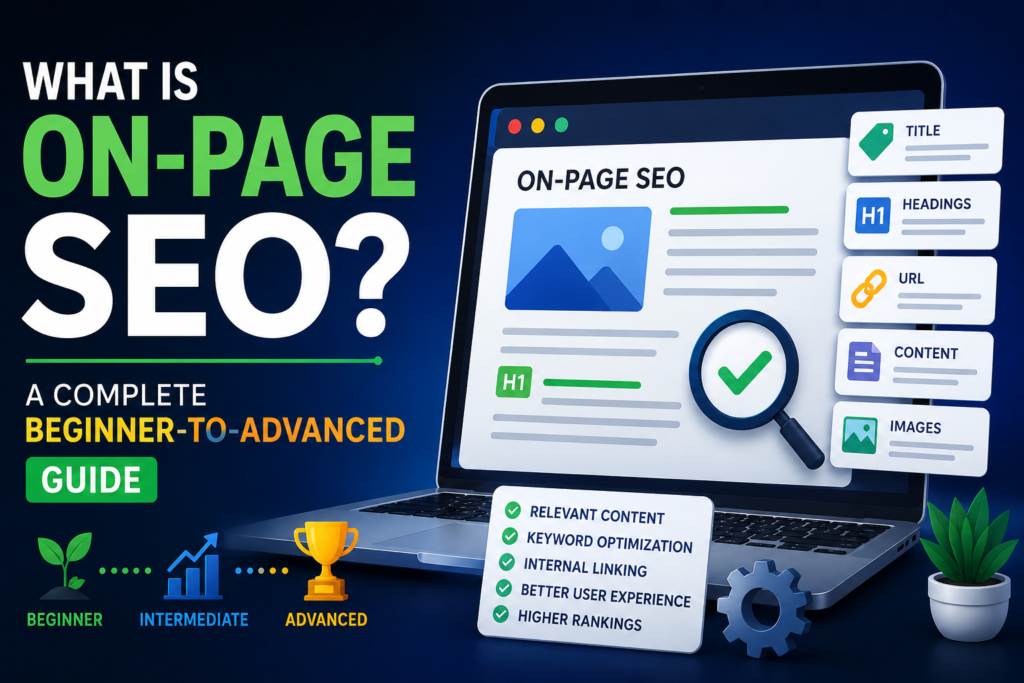
If you want your website to rank higher on Google, attract qualified traffic, and convert visitors into customers, mastering On-Page SEO is essential.
As a digital marketing expert, I’ve seen businesses struggle not because of poor services — but because their websites aren’t properly optimized. On-page SEO is the foundation of every successful search strategy.
In this complete guide, you’ll understand everything from basic principles to advanced optimization techniques.
What is On-Page SEO?
On-page SEO refers to the process of optimizing individual web pages to rank higher in search engines and earn more relevant traffic.
Unlike off-page SEO (which focuses on backlinks), on-page SEO is fully within your control. It includes:
- Keyword optimization
- Meta tags
- Content structure
- Internal linking
- URL structure
- User experience
- Technical page elements
Simply put: it’s how you optimize what’s on your website.
Beginner-Level On-Page SEO Fundamentals
1. Keyword Optimization
Everything starts with the right keywords.
You must:
- Identify primary and secondary keywords
- Understand search intent
- Avoid keyword stuffing
- Place keywords naturally
Where to Include Keywords:
✔ Page title
✔ Meta description
✔ URL
✔ Headings (H1, H2, H3)
✔ First 100 words
✔ Image alt text
Smart keyword placement helps search engines understand your page’s topic clearly.
2. Optimizing Meta Tags
Meta tags influence both rankings and click-through rates.
Title Tag
- Keep it under 60 characters
- Include your primary keyword
- Make it compelling
Meta Description
- Keep it under 160 characters
- Add value-driven messaging
- Encourage clicks
Well-written meta tags improve visibility and traffic.
3. SEO-Friendly URL Structure
Your URLs should be:
- Short
- Clear
- Keyword-rich
- Free of unnecessary numbers or symbols
Example:
❌ yourwebsite.com/page?id=123
✔ yourwebsite.com/on-page-seo-guide
Clean URLs improve crawlability and user trust.
Intermediate On-Page SEO Strategies
4. Content Structure & Readability
Search engines prioritize user experience.
Structure your content using:
- One H1 per page
- Organized H2 and H3 subheadings
- Short paragraphs
- Bullet points
- Clear formatting
Well-structured content increases engagement and reduces bounce rate.
5. Internal Linking Strategy
Internal links help:
- Distribute page authority
- Improve crawlability
- Guide users through your website
Link relevant pages using descriptive anchor text instead of generic phrases like “click here.”
6. Image Optimization
Images improve engagement — but only if optimized.
Make sure to:
- Compress images for faster loading
- Add descriptive alt text
- Use proper file names
- Choose responsive formats
This improves accessibility and page speed.
Advanced On-Page SEO Techniques
7. Search Intent Optimization
Ranking isn’t just about keywords — it’s about matching user intent.
There are four main types:
- Informational
- Navigational
- Commercial
- Transactional
Analyze what currently ranks on Google and align your content accordingly.
8. Core Web Vitals & Page Experience
User experience is now a ranking factor.
Focus on:
- Page speed
- Mobile responsiveness
- Visual stability
- Secure HTTPS connection
A fast, mobile-friendly site improves both rankings and conversions.
9. Schema Markup (Structured Data)
Schema helps search engines better understand your content.
It can generate:
- Rich snippets
- Star ratings
- FAQs
- Product details
Structured data increases click-through rates significantly.
10. Content Depth & Topical Authority
To outrank competitors:
- Cover topics comprehensively
- Answer related questions
- Add FAQs
- Update content regularly
Google rewards pages that provide complete value.
Common On-Page SEO Mistakes to Avoid
❌ Keyword stuffing
❌ Duplicate content
❌ Missing meta tags
❌ Slow loading speed
❌ Poor mobile experience
❌ Ignoring internal linking
Small mistakes can limit ranking potential.
Why On-Page SEO Matters for Business Growth
When done correctly, on-page SEO:
✔ Increases organic visibility
✔ Improves website traffic
✔ Enhances user experience
✔ Boosts conversion rates
✔ Reduces long-term marketing costs
For sustainable digital growth, on-page optimization is not optional — it’s foundational.
Final Thoughts
On-page SEO is the backbone of successful digital marketing. While paid ads can bring quick traffic, optimized web pages create long-term authority and consistent leads.
As a digital marketing expert, I focus on building strong on-page foundations before scaling traffic. Because when your website is optimized correctly, every visitor has a higher chance of converting.